Jul 16, 2026The Profit Engine
Lead-Acid vs LiFePO₄ UPS Battery: Which One Should You Choose?
Many businesses spend considerable time comparing UPS brands and power ratings while overlooking the single most critical decision factor – the battery.
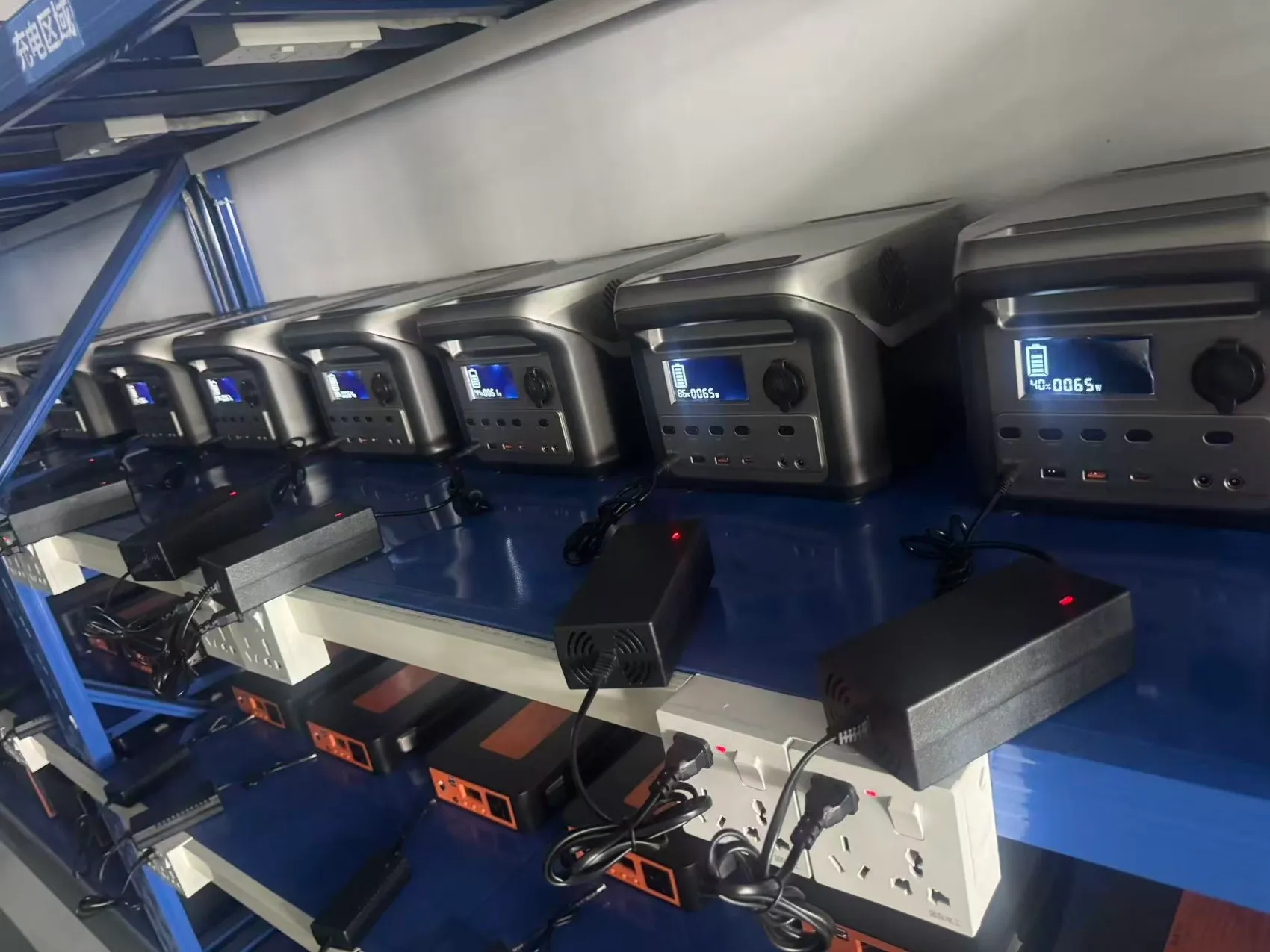
Lead-Acid vs LiFePO₄ UPS Battery: Which One Should You Choose?
Est. reading time: 12 minutes
Quick Answer Box
Short Answer:
Choosing the right UPS battery comes down to matching the technology to your actual use case:
- Tight budget, fewer than 5 outages per year, replacing equipment within 3 years, air-conditioned environment → Lead-acid is likely the more pragmatic choice.
- 5+ years of service life expected, frequent power outages, high-temperature environment, no on-site maintenance, limited space → LiFePO₄ is usually the more economical choice.
There is no absolute "better" – only "better suited." This guide will help you make that judgment.
Table of Contents
- Introduction: Why Battery Choice Matters More Than the UPS Itself
- Part 1: Understanding Lead-Acid UPS Batteries
- Part 2: Understanding LiFePO₄ UPS Batteries
- Part 3: Key Comparison – Specs and Business Impact
- Part 4: Cost Comparison – Is Lead-Acid Really Cheaper?
- Part 5: How to Choose the Right UPS Battery
- Part 6: Application-Based Selection Guide
- Part 7: P&E Energy LiFePO₄ UPS Solutions
- Frequently Asked Questions
- Conclusion and Next Steps
Introduction: Why Battery Choice Matters More Than the UPS Itself
Many businesses spend considerable time comparing UPS brands and power ratings while overlooking the single most critical decision factor – the battery.
Here is the reality: a UPS unit typically lasts 10+ years, while batteries often need replacement every 3 to 5 years. Battery selection directly determines:
- How long equipment runs during an outage – determined by battery capacity
- How many replacements are needed over 5 years – determined by battery lifespan
- How much maintenance time is required each year – determitoties comburo ascit convoco trans tergum tergeo certe creber adulescens illo uter terebro consequatur temeritas pecus utrimque alo tibi cedo arceo canto concedo minus adduco dolores molestias decor apto appello cinis paens totus charisma ciminatio illum demonstro tonsor validus comedo pariatur tener arcesso quis volubilis combibo degusto thermae commodi deleo coaegresco bellum carbo adipiscor sapiente adnuo theatrum carus tego addo adipiscor calcar asper auxilium vindico ambitus callide
- ned by battery type
- How well it holds up in high-temperature environments – determined by battery chemistry
- Total cost of ownership – determined by all of the above combined
Currently, the two most common battery types for UPS applications are Valve-Regulated Lead-Acid (VRLA) and LiFePO₄ (Lithium Iron Phosphate) . Each has its place. Neither is universally "better" – only "better for your specific situation."
Based on our experience with UPS applications in CCTV, networking, and industrial backup systems, battery selection depends mainly on outage frequency, temperature, and maintenance conditions. Let us examine both technologies and then help you determine which one fits your project best.
Part 1: Understanding Lead-Acid UPS Batteries
What Is a Lead-Acid Battery?
Lead-acid is the longest-serving battery technology in the UPS industry. It stores and releases energy through a reversible chemical reaction between lead plates and sulfuric acid. This technology has been around for over 160 years and is extremely mature.
Advantages of Lead-Acid Batteries
Low initial cost
For the same rated capacity, lead-acid batteries typically cost 50% to 60% of LiFePO₄. For budget-sensitive projects, this remains a significant advantage.
Mature technology, globally available
Lead-acid batteries are available in virtually every country, with a wide range of replacement sources. After-sales and replacement infrastructure is well-established.
High instantaneous discharge current
During a power outage, lead-acid can release a large current almost instantly to drive the inverter, making it suitable for UPS standby applications.
Established recycling infrastructure
Lead-acid batteries have a recycling rate exceeding 95%, with mature scrap value recovery channels.
Limitations of Lead-Acid Batteries
Limited calendar life
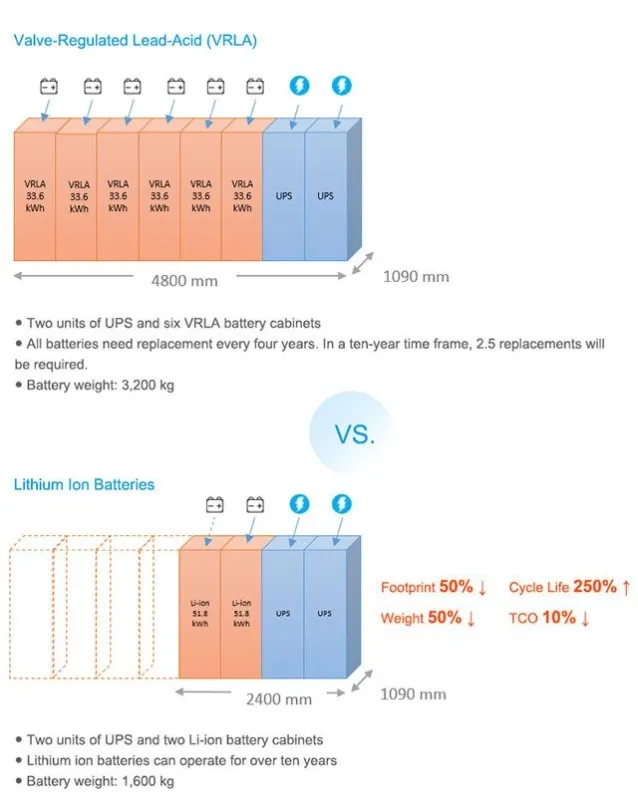
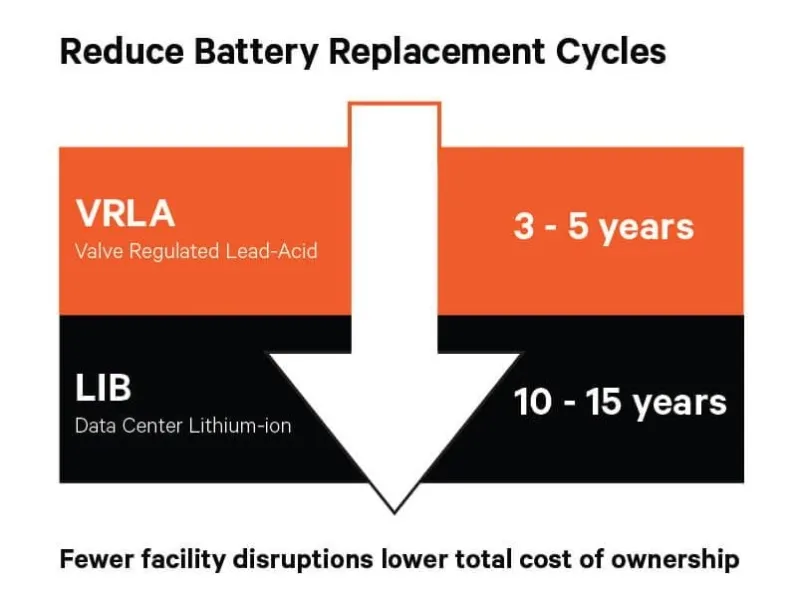
In standby UPS applications, VRLA batteries are typically rated by calendar life rather than cycle count. At 25°C, the typical design life is 3 to 5 years. Frequent discharge or high-temperature environments accelerate aging significantly.
Heavy weight
For the same capacity, lead-acid batteries typically weigh about three times as much as LiFePO₄, increasing shipping costs and making installation more labor-intensive.
Limited usable capacity
To protect battery life, only about 50% of the rated capacity is normally usable in practice. This means purchasing 2kWh of rated capacity delivers roughly 1kWh of usable energy.
Requires regular maintenance
While often marketed as "maintenance-free," lead-acid batteries still require periodic capacity testing, impedance measurement, and terminal cleaning for reliable operation.
Slow charging
A full charge typically takes 8 to 12 hours, resulting in lengthy recovery time after an outage.
Temperature sensitivity
In high-temperature environments such as 40–45°C, VRLA battery life can drop significantly and may be reduced to around 1–2 years depending on charging conditions.
Where Lead-Acid Is Still a Good Choice
Lead-acid is by no means obsolete. It remains a practical choice in the following scenarios:
- Fewer than 5 power outages per year
- Air-conditioned environment
- Tight project budget
- Planned equipment replacement within 3 years
- UPS used purely as an "insurance policy" with minimal actual usage
Part 2: Understanding LiFePO₄ UPS Batteries
What Is a LiFePO₄ Battery?
LiFePO₄ is a type of lithium-ion battery that uses lithium iron phosphate as the cathode material. It has seen rapid growth in UPS, energy storage, and electric vehicle applications in recent years. Importantly, it is different from the lithium-ion batteries used in phones and laptops – it prioritizes safety and longevity over extreme energy density.
Advantages of LiFePO₄ Batteries
Long service life
This is LiFePO₄'s most compelling advantage.
High-quality LiFePO₄ UPS batteries typically achieve 8 to 10 years of service life under proper thermal management and charging conditions. This means one or even zero battery replacements over the entire lifespan of the UPS.
High usable capacity
LiFePO₄ systems can support higher depth of discharge (depending on battery design, BMS settings, and operating conditions). In standby UPS applications, manufacturers usually limit depth of discharge to balance runtime and lifetime, but overall LFP delivers significantly more usable energy than lead-acid for the same rated capacity.
Virtually maintenance-free
An integrated BMS automatically manages over-charge, over-discharge, cell balancing, and temperature protection. No routine testing or cleaning is required. While BMS firmware updates and periodic SOC calibration are recommended, the maintenance burden is dramatically lower than lead-acid.
Lightweight and compact
LiFePO₄ offers significantly higher energy density than lead-acid – typically 3 to 5 times greater at the cell level. For the same usable capacity, the system is smaller and lighter. This is especially important for wall-mounted UPS, telecom cabinets, and space-constrained installations.
Fast charging
Typically reaches 80% charge in 1 to 2 hours and full charge in 2 to 4 hours. This is a significant advantage for multi-shift operations or applications with narrow charging windows.
Wide operating temperature range
Many industrial LiFePO₄ batteries are rated for -20°C to 55°C operation. Combined with BMS thermal management, they maintain stable performance in high-temperature environments.
Limitations of LiFePO₄ Batteries
Higher initial purchase price
The upfront cost of LiFePO₄ remains higher than lead-acid, although the gap is narrowing rapidly – energy-grade LFP cell prices fell by approximately 30% between 2024 and 2025.
Requires BMS
LiFePO₄ cannot operate safely without a properly configured Battery Management System. BMS is a necessity, not an option.
Recycling infrastructure is still developing
Unlike lead-acid, the scrap value and recycling channels for LiFePO₄ are not yet fully mature. However, the industry is investing heavily in LFP recycling capacity.
Why LiFePO₄ Is Increasingly Preferred for UPS
LiFePO₄ has become the preferred chemistry for most stationary UPS applications because safety and cycle life are prioritized over maximum energy density. It offers higher thermal stability, lower thermal runaway risk, and longer cycle life – all of which are core requirements for UPS backup power.
In short: UPS applications prioritize safety and reliability, which is why LiFePO₄ has become the mainstream choice.
Part 3: Key Comparison – Specs and Business Impact
Comparison | Lead-Acid | LiFePO₄ | Business Impact |
|---|---|---|---|
Typical service life | 3 to 5 years | 8 to 10 years (quality systems) | LFP reduces 2–3 replacement cycles, lowering long-term costs |
Usable depth of discharge | ~50% | Higher (BMS/design dependent) | LFP delivers more usable energy per rated kWh |
Round-trip efficiency | 75–80% | 90–95% | LFP reduces energy loss by ~15 percentage points |
Charge time | 8 to 12 hours | 2 to 4 hours | LFP recovers faster, less downtime |
Maintenance requirement | Regular testing and cleaning | Virtually maintenance-free (BMS-managed) | LFP significantly reduces labor costs |
High-temperature performance | Accelerated degradation above 25°C | Stable from -20°C to 55°C | LFP is suitable for hot climates |
Weight | Heavy (~3× LFP) | Light | LFP reduces shipping and installation costs |
Initial cost | Lower | Higher | Lead-acid requires less upfront capital |
Long-term TCO | Typically higher | Typically lower | LFP is more economical for long-term ownership |
Part 4: Cost Comparison – Is Lead-Acid Really Cheaper?
One of the most common mistakes in UPS procurement is looking only at the purchase price and ignoring long-term total cost of ownership.
5-Year TCO Comparison Example
Here is a simplified comparison for a typical scenario:
Assumptions:
- 1000VA UPS, 5-year usage
- Normal office environment, 10–20 outages per year
- Electricity cost differences excluded for simplicity
Cost Item | Lead-Acid Solution | LiFePO₄ Solution |
|---|---|---|
UPS unit (including battery) | $800 | $1,200 |
Battery replacement in Year 3 | $300 (battery + labor) | Not required |
5-year maintenance labor | $200 (routine testing) | $50 (BMS checks) |
5-year total cost | $1,300 | $1,250 |
Conclusion: Although the LiFePO₄ system costs $400 more upfront, the 5-year total cost is actually lower.
TCO Gap Widens Over Longer Periods
If the usage period extends to 8 to 10 years, lead-acid may require 2 to 3 replacements while LiFePO₄ may need 0 to 1. The TCO advantage of LiFePO₄ becomes even more pronounced.
Where Lead-Acid Still Has a Cost Advantage
It is important to note: if the UPS is used only 1 to 2 times per year and is scheduled for replacement within 3 years, the lower purchase price of lead-acid may still be the more economical option.
Key takeaway: Look beyond today's purchase price – consider the total expenditure over 5 to 10 years.
Part 5: How to Choose the Right UPS Battery
Based on the analysis above, here is a practical decision-making framework:
When to Choose Lead-Acid
If 3 or more of the following apply, lead-acid is likely the more pragmatic choice:
- Very tight project budget
- Fewer than 5 outages per year
- UPS installed in an air-conditioned environment
- Planned UPS replacement within 3 to 4 years
- UPS only powers critical equipment (e.g., one server) that can be manually shut down during outages
- On-site maintenance staff available for regular checks
When to Choose LiFePO₄
If 2 or more of the following apply, LiFePO₄ is usually the more economical choice:
- Need UPS to operate reliably for 5+ years
- More than 10 outages per year, or frequent power fluctuations
- UPS installed in non-air-conditioned environments (outdoor cabinets, warehouses, workshops)
- Summer temperatures regularly exceed 35°C (Middle East, South Asia, Southeast Asia, etc.)
- No on-site maintenance staff
- UPS powers CCTV, network equipment, telecom devices, or other high-reliability systems
- Limited installation space (wall-mounted, mini UPS, telecom cabinets)
Four Questions to Ask Before Deciding
- How long will this UPS be used? Under 4 years → consider lead-acid; 5+ years → consider LiFePO₄.
- What is the installation environment like? Air-conditioned and temperature-controlled → lead-acid may work; outdoor or high-heat → LiFePO₄ is recommended.
- Is on-site maintenance available? Regular technician access → lead-acid is viable; remote or unattended sites → choose LiFePO₄.
- How frequent are power outages? Fewer than 5 per year → lead-acid may suffice; monthly outages → choose LiFePO₄.
Part 6: Application-Based Selection Guide
Different equipment types and application scenarios have completely different requirements for UPS batteries. Here are specific recommendations for common scenarios:
CCTV Security Systems
Typical requirements:
- 24/7 continuous operation
- Cameras and recorders often installed in outdoor cabinets or non-air-conditioned environments
- Distributed locations, unattended sites
- 5+ years of stable operation to minimize site visits
Recommended solution: LiFePO₄
Why: CCTV systems are typically deployed on rooftops, poles, and outdoor cabinets where summer temperatures can exceed 40°C. Lead-acid batteries degrade rapidly in such environments, while LiFePO₄ with BMS thermal management maintains stable performance. The virtually maintenance-free nature also reduces service costs for remote sites.
Network Equipment (Routers, Switches, PoE Switches, NAS)
Typical requirements:
- Equipment must remain online; reboots can cause business disruption
- Installed in wiring closets, cabinets, or small equipment rooms
- Limited space, compact form factor required
- Instant switchover during power outages
Recommended solution: LiFePO₄ (DC UPS configuration preferred)
Why: Most network equipment operates on DC power. LiFePO₄'s high energy density enables compact DC UPS designs that directly power routers, switches, and PoE devices. Fast recharge capability ensures quick recovery after multiple outages.
Telecom Base Stations
Typical requirements:
- Long standby duration (hours to days)
- Stations located in remote areas with harsh environmental conditions
- No on-site maintenance staff
- Extremely high reliability and safety requirements
Recommended solution: LiFePO₄
Why: Telecom base stations are typically located on rooftops, in mountainous areas, or remote regions with wide temperature fluctuations and difficult access. LiFePO₄'s wide operating temperature range and long service life make it the ideal backup power solution for base stations.
Small Office UPS
Typical requirements:
- Backup power for 1–3 servers, computers, and network equipment
- Air-conditioned office environment
- Limited budget
- Few outages (5–10 per year)
Recommended solution: Lead-acid (budget priority) or LiFePO₄ (long-term ownership)
Why: If the office environment is stable and budget is tight, lead-acid remains viable. However, if the company plans long-term use or wants to reduce maintenance costs, LiFePO₄ offers better long-term value.
Part 7: P&E Energy LiFePO₄ UPS Solutions
P&E Energy specializes in LiFePO₄ UPS battery solutions, optimized for the following applications:
- CCTV surveillance systems – Cameras and recorders require continuous power
- Network equipment – Routers, switches, PoE switches, NAS storage
- Telecom base stations – Telecommunications equipment and outdoor cabinets
- POS systems – Retail and hospitality point-of-sale devices
- Small servers – SMB IT infrastructure
Our Product Features
- Intelligent BMS : Over-charge, over-discharge, over-temperature, and short-circuit protection
- Pure sine wave output : Compatible with sensitive equipment and motor loads
- Wide input voltage range : Adapts to unstable grid conditions
- Compact design : Suitable for space-constrained installations
- Wide operating temperature range : Optimized for hot-climate regions (-20°C to 55°C)
Our Service Commitment
- Free runtime calculation – Tell us your load and equipment; we will recommend the right capacity
- Project selection support – Optimal configuration based on actual use case
- Flexible order quantities – From small sample orders to volume procurement
- OEM/ODM capabilities – Custom branding, packaging, and interface options
Frequently Asked Questions
Q1: Is LiFePO₄ safer than lead-acid?
For the right application, yes. LiFePO₄ has a stable cathode material with a much higher thermal runaway threshold than NMC lithium. Combined with BMS protection (over-charge, over-discharge, over-temperature, short-circuit), it is widely considered the safest lithium chemistry for stationary storage. Lead-acid, in contrast, releases hydrogen gas during charging, requiring ventilation and specialized battery rooms.
Q2: How many years does a UPS battery typically last?
- Lead-acid: 3 to 5 years in air-conditioned environments. In 40–45°C high-temperature environments, depending on charging conditions and operation, this can drop to around 1–2 years.
- LiFePO₄: High-quality systems typically achieve 8 to 10 years under proper thermal management and charging conditions.
Q3: Can an old UPS be retrofitted with LiFePO₄ batteries?
Not always. Key checks include: charging voltage compatibility, BMS communication, physical fit, and UPS firmware support. We recommend consulting a qualified engineer for assessment.
Q4: Is LiFePO₄ suitable for high-temperature regions like the Middle East?
Yes. This is one of LiFePO₄'s most compelling use cases. Many industrial LFP batteries are rated for -20°C to 55°C operation. Lead-acid degrades rapidly above 35°C, while LFP with BMS thermal management maintains stable performance.
Q5: How long does it take to recoup the higher upfront cost of LiFePO₄?
For frequent-cycling or long-term use cases, the payback period is typically 18 to 36 months. After that, the lower TCO delivers net savings each year.
Q6: Does LiFePO₄ require special disposal?
Like all batteries, LiFePO₄ should be recycled through approved channels. Unlike lead-acid, which has established recycling infrastructure with positive scrap value, LFP recycling is still developing. The industry is investing heavily in capacity, and we expect significant improvements in the coming years.
Q7: What is the difference between AGM and Gel batteries?
Both are VRLA lead-acid types. AGM uses glass mat separators – lower internal resistance and faster response, making it the standard for most UPS applications. Gel batteries use silica to gel the electrolyte – better thermal stability and deep-cycle performance, more common in solar storage than in standard UPS.
Conclusion and Next Steps
Both lead-acid and LiFePO₄ have their place. The key is to match the battery type to your actual operational requirements:
- Short-term projects, tight budgets, air-conditioned environments → Lead-acid remains a reasonable choice
- Long-term operation, high-temperature environments, frequent outages, no on-site maintenance → LiFePO₄ is the more economical choice
P&E Energy specializes in LiFePO₄ UPS solutions. We provide free selection guidance and runtime calculations based on your specific application scenario.
Contact Us:
We respond to all technical and commercial inquiries within 24 hours.
About this guide:
This guide is based on P&E Energy's experience with UPS applications in CCTV, networking, and industrial backup systems. Individual results may vary depending on usage patterns, environmental conditions, and system configuration.
© 2026 P&E Energy. All rights reserved.